Der Bestpreis bewegt sich im Trend der Kategorie Lesen & Literatur. Mit 32,96 € liegt der Bestpreis über dem mittleren Preis (15,26 €) von 108 Penguin Press-Produkten in Lesen & Literatur.
Bestpreis aus dem Preisverlauf; Kategorie- und Markentrend: Median der Preisänderung gleicher Produkte im selben Shop über 90 Tage, wöchentlich berechnet. Methodik
Browser-Benachrichtigung bei PreissenkungWir melden uns, sobald es günstiger wird als heute (32,96 €) — höchstens einmal am Tag. Ohne E-Mail, ohne Konto, jederzeit abbestellbar. Amazon-Angebote sind ausgenommen. Datenschutz
Aktuell ab 32,96 € —
bei welchem Preis sollen wir dich benachrichtigen?
Einmalige Benachrichtigung per E-Mail nach Bestätigung (Double-Opt-in).
Keine Weitergabe. Datenschutz
Hinweis: Amazon-Preise sind in der Preisverfolgung bzw. im Preisverlaufsgraphen nicht enthalten. Wir versenden keine Benachrichtigungen zu Produkten über Amazon.
Kundenbewertungen
5,0/5
(1 Bewertungen)
★★★★★
k.A.23.05.2026ean-shopping.de
Dieses Buch von Ron Chernow über Mark Twain ist ein absolut faszinierendes und tiefgründiges Werk, das mich in die Welt dieser literarischen Epoche hineinzieht. Es ist eine brillante und äußerst empfehlenswerte Lektüre.
Deine Bewertung *
0/2000
Bewertungen werden nach KI-Prüfung veröffentlicht.
Produktfakten auf einen Blick zur EAN 9780525561729
Hersteller
Penguin Press
EAN
9780525561729
Hersteller-Artikelnr.
10505762
Kategorie
Lesen & Literatur
Günstigster Preis
32,96 € (medimops.de)
Anbieter im Vergleich
4 Shops
Preise aktualisiert
21.10.2026 18:21 Uhr
Gewicht
3.50094072056 kg
Produktbeschreibung
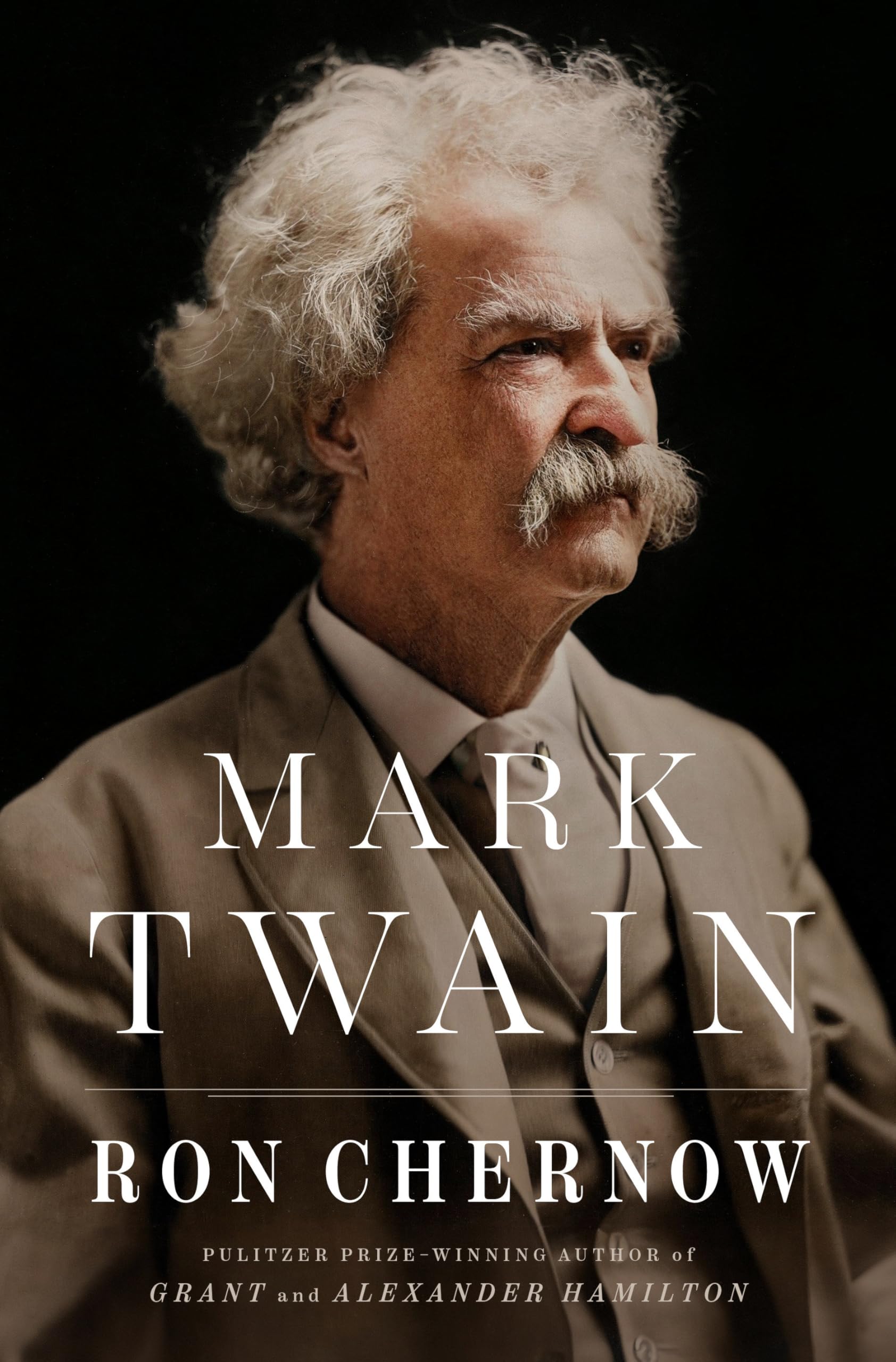
The #1 New York Times Bestseller! One of Barack Obama's Summer Reading List Picks “Comprehensive, enthralling . . . Mark Twain flows like the Mississippi River, its prose propelled by Mark Twain’s own exuberance.” — The Boston Globe “Chernow writes with such ease and clarity . . . For all its length and detail, [ Mark Twain ] is deeply absorbing throughout.” — The Washington Post Pulitzer Prize-winning biographer Ron Chernow illuminates the full, fascinating, and complex life of the writer long celebrated as the father of American literature, Mark Twain Before he was Mark Twain, he was Samuel Langhorne Clemens. Born in 1835, the man who would become America’s first, and most influential, literary celebrity spent his childhood dreaming of piloting steamboats on the Mississippi. But when the Civil War interrupted his career on the river, the young Twain went west to the Nevada Territory and accepted a job at a local newspaper, writing dispatches that attracted attention for their brashness and humor. It wasn’t long before the former steamboat pilot from Missouri was recognized across the country for his literary brilliance, writing under a pen name that he would immortalize. In this richly nuanced portrait of Mark Twain, acclaimed biographer Ron Chernow brings his considerable powers to bear on a man who shamelessly sought fame and fortune, and crafted his persona with meticulous care. After establishing himself as a journalist, satirist, and lecturer, he eventually settled in Hartford with his wife and three daughters, where he went on to write The Adventures of Tom Sawyer and Adventures of Huckleberry Finn . He threw himself into the hurly-burly of American culture, and emerged as the nation’s most notable political pundit. At the same time, his madcap business ventures eventually bankrupted him; to economize, Twain and his family spent nine eventful years in exile in Europe. He suffered the death of his wife and two daughters, and the last stage of his life was marked by heartache, political crusades, and eccentric behavior that sometimes obscured darker forces at play. Drawing on Twain’s bountiful archives, including thousands of letters and hundreds of unpublished manuscripts, Chernow masterfully captures the man whose career reflected the country’s westward expansion, industrialization, and foreign wars, and who was the most important white author of his generation to grapple so fully with the legacy of slavery. Today, more than one hundred years after his death, Twain’s writing continues to be read, debated, and quoted. In this brilliant work of scholarship, a moving tribute to the writer’s talent and humanity, Chernow reveals the magnificent and often maddening life of one of the most original characters in American history. EAN: 9780525561729 Farbverschnitt: Generell werden die Bücher ohne Farbverschnitt geliefert, auch wenn die Abbildungen einen Farbverschnitt zeigen. Erscheinungsjahr: 13.05.2025 Autoren: Chernow, Ron Seitenzahl/Blattzahl: 1200 Abbildungen: 2-8PP B&W INSERTS; 6 B&W PART OPENER PHOTOS Themenüberschrift: BIOGRAPHY & AUTOBIOGRAPHY / Literary~BIOGRAPHY & AUTOBIOGRAPHY / Historical~HISTORY / Modern / 19th Century Keyword: gifts for dad;dad books;ron chernow books;literary biographies;books for dad;dad gifts;biographies;mark twain book;mark twain books;ron chernow;mark twain biography;mark twain;twain;literary gifts;biography;mark twain collection;historical biographies;autobiographies;historical books;world history;history;history books;autobiography;history gifts;literature;history teacher gifts;gifts for history buffs;biographies of famous people;history buff gifts;history lovers gifts;literary criticism;essays Fachschema: Biography / Autobiography Fachkategorie: Biografien: Literatur~Geschichte allgemein und Weltgeschichte Imprint-Titels: Penguin Press
* Alle Preise inkl. MwSt., ggf. zzgl. Versandkosten. Preise und Verfügbarkeit können sich seit der letzten Aktualisierung geändert haben.
Beim Klick auf „Zum Angebot" oder „Zum Shop" verlässt du EAN-Shopping.de und wirst zum jeweiligen Händler weitergeleitet.
EAN-Shopping.de erhält ggf. eine Provision — für dich entstehen keine Mehrkosten.
Letzte Aktualisierung: 21.10.2026 18:21 Uhr.
Beantwortet aus dem Preisverlauf der letzten 90 Tage, den aktuellen
Händlerangeboten, den vorliegenden Bewertungen und der Nachfrage.
Ist Chernow, Ron: Mark Twain gerade günstig?
Aktuell liegt der günstigste Preis bei 32,96 €. Das ist praktisch der niedrigste Stand der letzten 90 Tage (32,96 €).
Lohnt sich der Preisvergleich bei Chernow, Ron: Mark Twain?
Zwischen dem günstigsten und dem teuersten der 4 Anbieter liegen 12,34 € — das sind 37 % bei identischem Artikel.
Ist Chernow, Ron: Mark Twain im Vergleich gerade günstig?
Der Bestpreis ist seit 24.07.2026 um 2,3 % gefallen (33,73 € → 32,96 €). In der Kategorie Lesen & Literatur sind die Preise in 90 Tagen stabil geblieben. Der Bestpreis bewegt sich im Trend der Kategorie Lesen & Literatur. Mit 32,96 € liegt der Bestpreis über dem mittleren Preis (15,26 €) von 108 Penguin Press-Produkten in Lesen & Literatur.
Wo ist Chernow, Ron: Mark Twain am günstigsten?
Den niedrigsten Gesamtpreis bietet medimops.de mit 32,96 € versandkostenfrei.
Ist Chernow, Ron: Mark Twain lieferbar?
Alle 4 Anbieter melden den Artikel derzeit als verfügbar.
 Finde Chernow, Ron: Mark Twain