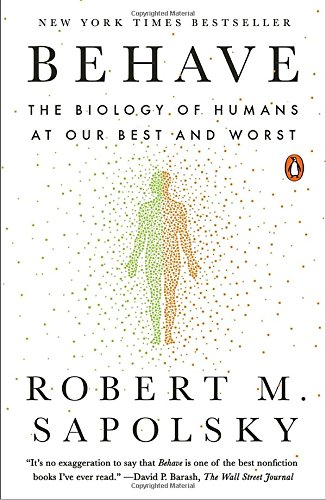
Bildquelle: medimops.de
Preisverlauf (90 Tage)
Tiefstwert (90 Tage): 15,98 €
Trend
Stabile Preise
Basierend auf den letzten 14 Tagen des Preisverlaufs.
Browser-Benachrichtigung bei PreissenkungWir melden uns, sobald es günstiger wird als heute (18,40 €) — höchstens einmal am Tag. Ohne E-Mail, ohne Konto, jederzeit abbestellbar. Amazon-Angebote sind ausgenommen. Datenschutz
Hinweis: Amazon-Preise sind in der Preisverfolgung bzw. im Preisverlaufsgraphen nicht enthalten. Wir versenden keine Benachrichtigungen zu Produkten über Amazon.
Kundenbewertungen
4,3/5
(3 Bewertungen)
Behave: The Biology of Humans at Our Best and Worst
Hersteller:
Random House Books For Young Readers
· MPN: 1011502
Günstigster Preis
18,40 €
inkl. MwSt.
Bei 2 Anbietern im Vergleich
Zuletzt aktualisiert: 30.09.2026 18:21 Uhr
Bei preigu.de kaufen — 18,40 €
Verfügbar · inkl. MwSt. · Versand k.A. · 1-2 Werktage
 Finde Behave: The Biology of Humans at Our Best and Worst
Produktfakten auf einen Blick zur EAN 9780143110910
- Hersteller
- Random House Books for Young Readers
- EAN
- 9780143110910
- Hersteller-Artikelnr.
- 1011502
- Kategorie
- Bücher
- Günstigster Preis
- 18,40 € (preigu.de)
- Anbieter im Vergleich
- 2 Shops
- Preise aktualisiert
- 30.09.2026 18:21 Uhr
- Gewicht
- 0.59965735264 kg
Produktbeschreibung
Behave | The Biology of Humans at Our Best and Worst | Robert M. Sapolsky | Taschenbuch | Englisch
Preisvergleich
2 Angebote gefunden
1
preigu.de DE
Aktualisiert: 30.09.2026 18:13 Uhr
18,40 €
inkl. MwSt.
Zum Angebot
2
medimops.de DE
Aktualisiert: 30.09.2026 18:21 Uhr
21,09 €
inkl. MwSt.
Zum Shop
* Alle Preise inkl. MwSt., ggf. zzgl. Versandkosten. Preise und Verfügbarkeit können sich seit der letzten Aktualisierung geändert haben. Beim Klick auf „Zum Angebot" oder „Zum Shop" verlässt du EAN-Shopping.de und wirst zum jeweiligen Händler weitergeleitet. EAN-Shopping.de erhält ggf. eine Provision — für dich entstehen keine Mehrkosten. Letzte Aktualisierung: 30.09.2026 18:21 Uhr.
Weitere Produkte von Random House Books For Young Readers
Alle Produkte →

Green, John: John Green: The Complete Collection Box Set
Random House Books For Young Readers
ab 46,47 €
inkl. MwSt.
1 Anbieter im Vergleich

Carlin, John: Playing the Enemy
Random House Books For Young Readers
ab 15,63 €
inkl. MwSt.
1 Anbieter im Vergleich

Holland Julie Moody Bitches
Random House Books For Young Readers
ab 15,63 €
inkl. MwSt.
1 Anbieter im Vergleich

The New Map - Daniel Yergin Kartoniert (TB)
Random House Books For Young Readers
ab 14,92 €
inkl. MwSt.
1 Anbieter im Vergleich

Sepetys, Ruta: Salt to the Sea
Random House Books For Young Readers
ab 12,80 €
inkl. MwSt.
1 Anbieter im Vergleich
Weitere Produkte in „Bücher“
Alle in Kategorie →

Callahan, Maureen: Ask Not
Mudlark
ab 13,15 €
inkl. MwSt.
1 Anbieter im Vergleich

Harden, Blaine: Escape from Camp 14
Random House Books For Young Readers
ab 12,09 €
inkl. MwSt.
1 Anbieter im Vergleich
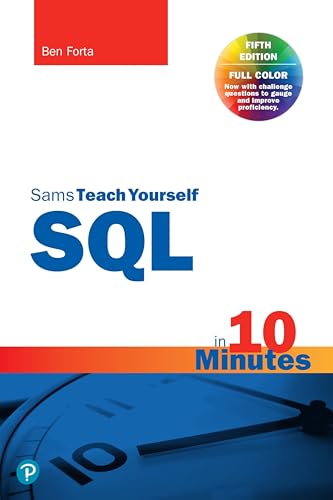
Forta, Ben: SQL in 10 Minutes a Day, Sams Teach Yourself
Sams Publishing
ab 33,92 €
inkl. MwSt.
1 Anbieter im Vergleich

Evans, Malcolm: International Law
Oxford University Press, Usa
ab 59,75 €
inkl. MwSt.
1 Anbieter im Vergleich
Häufige Fragen zur EAN 9780143110910
Beantwortet aus dem Preisverlauf der letzten 90 Tage, den aktuellen Händlerangeboten, den vorliegenden Bewertungen und der Nachfrage.
Ist Behave: The Biology of Humans at Our Best and Worst gerade günstig?
Aktuell liegt der günstigste Preis bei 18,40 €. Das sind 15 % über dem 90-Tage-Tief von 15,98 €. Der Höchstwert lag bei 18,40 €. Zuletzt ist der Preis gestiegen.
Wie stark schwankt der Preis für Behave: The Biology of Humans at Our Best and Worst?
In den letzten 90 Tagen bewegte sich der günstigste Preis zwischen 15,98 € und 18,40 € — eine Spanne von 15 %. Gemessen an 87 Tagen mit Preisdaten.
Wie gut ist Behave: The Biology of Humans at Our Best and Worst bewertet?
Behave: The Biology of Humans at Our Best and Worst kommt auf 4,3 von 5 Sternen aus 3 Bewertungen. Das ist eine gute Bewertung. Bei dieser geringen Zahl an Stimmen ist der Wert allerdings noch wenig belastbar.
Wo ist Behave: The Biology of Humans at Our Best and Worst am günstigsten?
Den niedrigsten Gesamtpreis bietet preigu.de mit 18,40 € versandkostenfrei.
Preisdaten zuletzt aktualisiert: 30.09.2026 18:21 Uhr