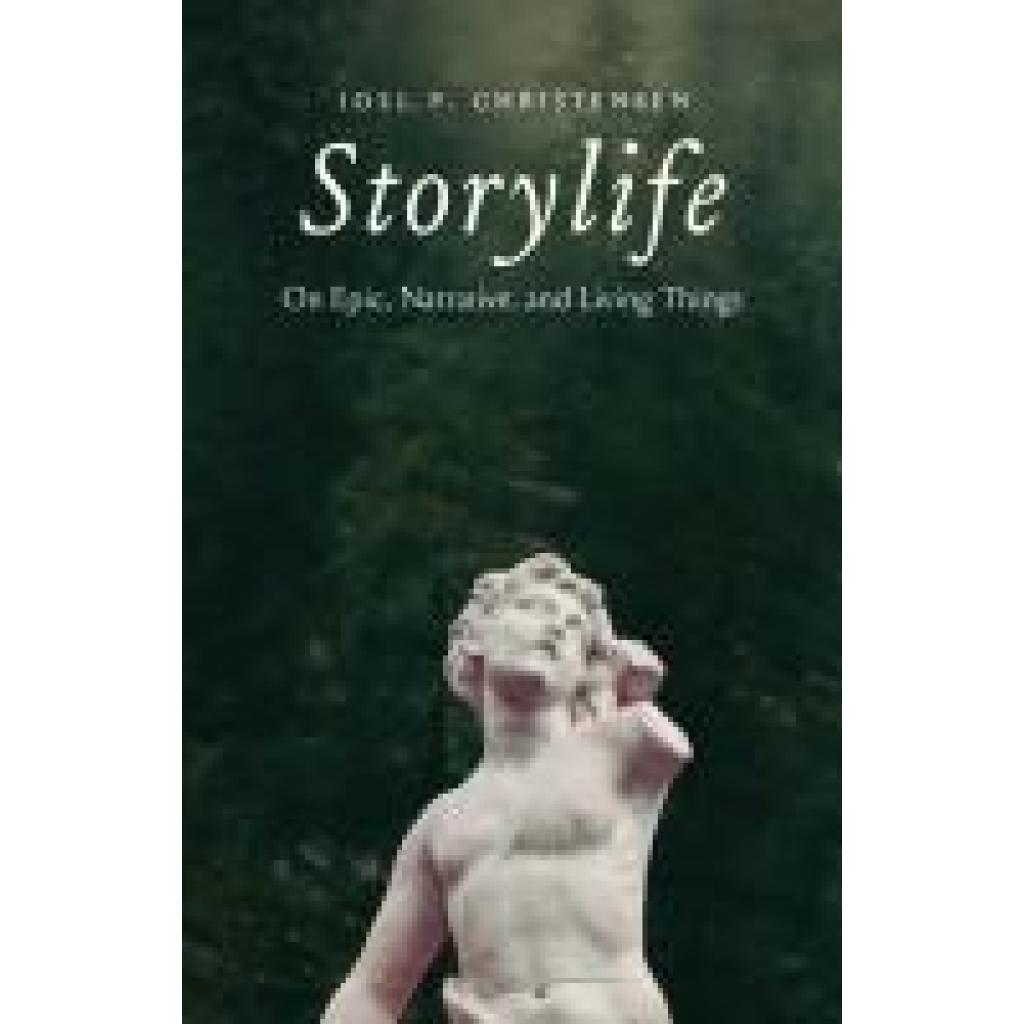
From Homer’s epics to mainstream news  stories have lives of their own—and humans may not
always control the narratives we create      Combining ancient epic and myth with analogies
from biology and the natural world  Joel P. Christensen explores the creative process and how
narratives develop. This bold work urges readers to treat narratives as living things with
their own agency in the world. Christensen starts by using Homeric epic to explore the way
language and meaning develop alongside audiences in complex ecosystems and then moves through
storytelling in the ancient Mediterranean over a thousand years. In this study  which ranges
from the evolution of narratives to viral ideas  and to the dangerous side of stories in mass
shootings and war  we see how narratives function as independent entities with consequences
that cause lasting harm.     Connecting his argument to the present day  Christensen addresses
contemporary cultural panics  including AI and ChatGPT  “post-truth” or alt-facts in the
digital age  and free speech and cancel culture. Storylife invites readers to rethink human
creativity  the importance of collective actions  and the lives we build together with and
against narrative. In an age rife with misinformation  it is time to reconsider how much
control we have over stories and how to educate ourselves once we acknowledge the power that
narrative exerts over us.