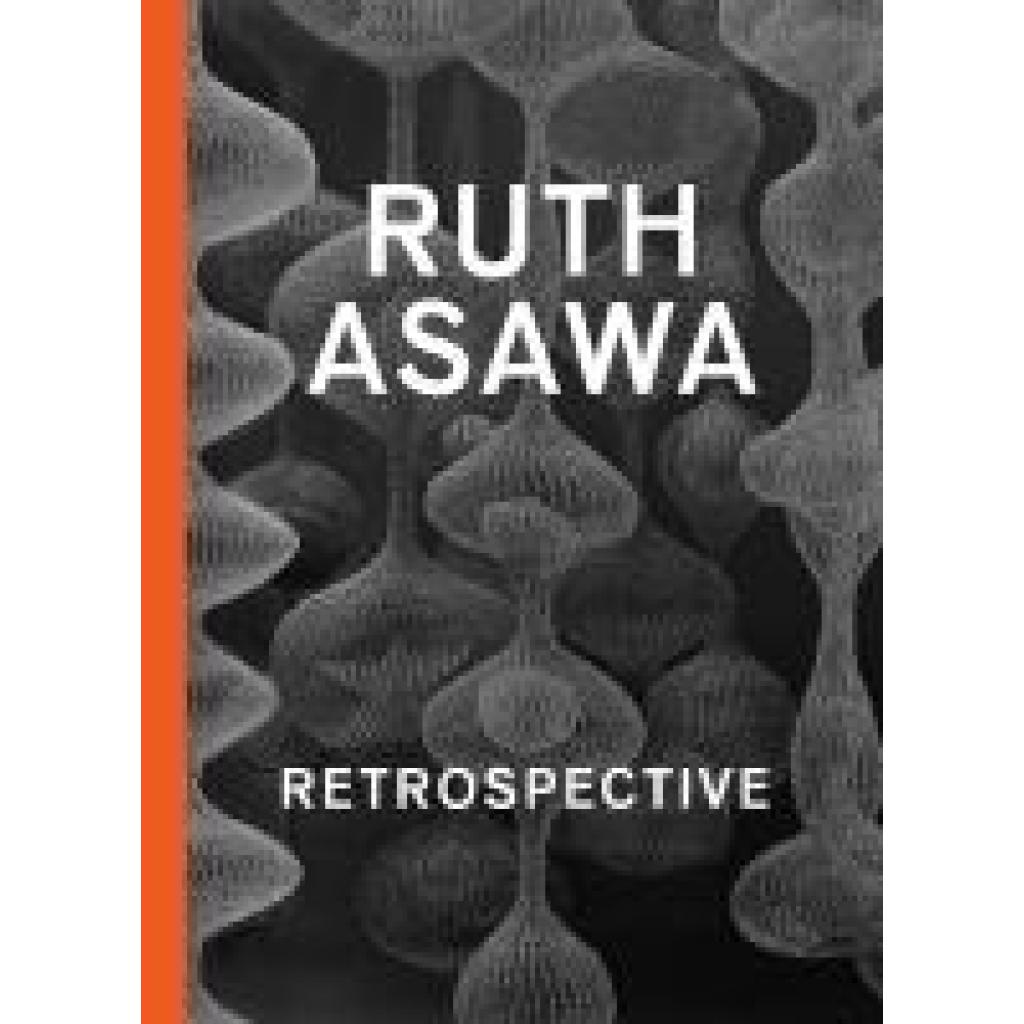
A landmark survey of the wide-ranging practice of one of the twentieth century’s most
innovative artists      Best known for her sinuous looped-wire sculptures  Ruth Asawa
(1926–2013) used everyday materials to create endlessly innovative works in a variety of media
over her more than six-decade-long career  from her student days at the experimental Black
Mountain College in the 1940s through her mature years in her adopted home city of San
Francisco.     This extensively illustrated volume explores the astonishing expansiveness of
Asawa’s work  from the abstract looped-wire sculptures for which she garnered national
attention in the 1950s to her nature-inspired tied-wire pieces  clay and bronze casts
paperfolds  paintings  drawings  sketchbooks  and prints. The book explores the ways in which
her longtime San Francisco home and garden served as the epicenter of her creative practice
and highlights the ethos of collaboration and inclusivity that informed her numerous public
sculpture commissions and unwavering dedication to arts advocacy.     Essays and other writings
consider Asawa and her work within the context of modern abstract sculpture  through the lens
of craft and the materiality of wire  and in relation to her Asian American identity and her
personal history as a Japanese American who was incarcerated with her family during World War
II. Focus texts illuminate the connections between Asawa and key artistic figures such as Josef
Albers  Imogen Cunningham  and R. Buckminster Fuller  with whom she maintained enduring
relationships.     Published in association with the San Francisco Museum of Modern Art   San
Francisco Museum of Modern Art   (April 5–September 2  2025)   The Museum of Modern Art  New
York   (October 19  2025–February 7  2026)   Guggenheim Museum Bilbao  Spain   (March
20–September 13  2026)   Fondation Beyeler  Riehen Basel  Switzerland   (October 18
2026–January 24  2027)