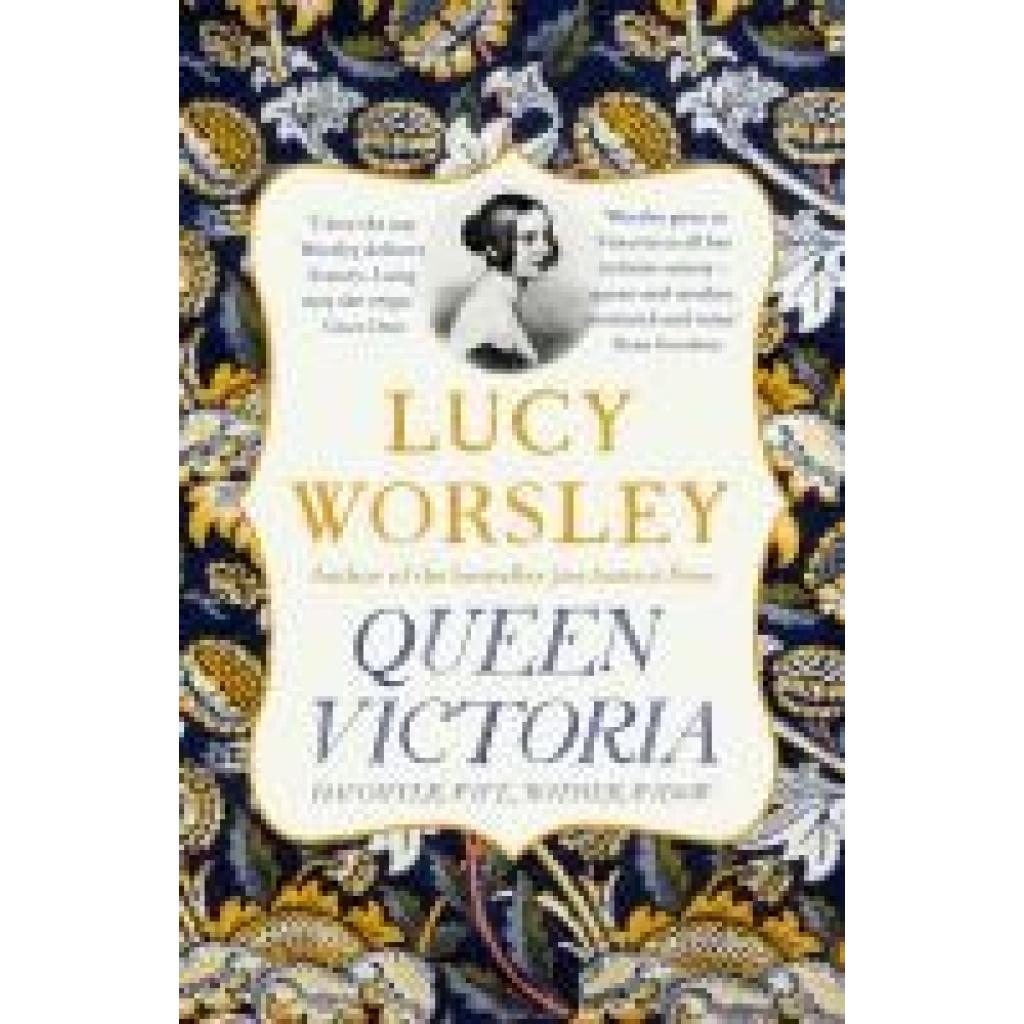
AN INTIMATE ACCOUNT OF ONE OF BRITAIN'S LONGEST-REIGNING - AND MOST EXTRAORDINARY - MONARCHS
FROM BESTSELLING HISTORIAN LUCY WORSLEY    THE PERFECT READ TO ACCOMPANY THE 125TH ANNIVERSARY
OF VICTORIA'S DEATH THIS JANUARY 2026  Readers LOVE Queen Victoria : 'This book changed my
whole perception of Queen Victoria' ¿¿¿¿¿ 'Fascinating. Lucy has really brought her to life'
¿¿¿¿¿ 'An insightful  interesting and readable account' ¿¿¿¿¿  *******************************
Who was Queen Victoria?   A little old lady  potato-like in appearance  dressed in everlasting
black? She was also a passionate young princess who loved dancing. And there is also a third
Victoria  the brilliant queen  one who invented a new role for the monarchy.  Victoria found a
way of ruling when people were deeply uncomfortable with having a woman on the throne.  Her
image as a conventional daughter  wife and widow concealed the reality of a talented
instinctive politician. Her actions  if not her words  reveal that she was tearing up the rules
on how to be female. But the price of this was deep personal pain.  By looking in detail at
twenty-four days of her life  through diaries  letters and more  we meet Queen Victoria
up-close and personal. Living with her from hour to hour  we can see and celebrate the
contradictions that make up British history's most recognisable woman.
**************************   Critical acclaim for Queen Victoria:  'A wonderfully fresh  vivid
and engaging portrait.' Jane Ridley  author of Bertie: A Life of Edward VII  'Has much of the
abundant charm of its author.' Spectator  'The glory of this book is in the details.' The Times
'Worsley's command of the material and elegant writing style make this a must-read.'
Publisher's Weekly  'An intimate glimpse.' Daily Mail  'An engaging portrait of the monarch.' i
paper  'Provides a unique insight into this inscrutable monarch.' Choice Magazine   'In this
lively  light-footed biography  just out in paperback  the popular TV historian Lucy Worsley
looks at just 24 days of Victoria's 81-year long life to reveal unexpected sides to the
monarch.' BBC History Magazine