
Bildquelle: amazon.com
Preisverlauf (90 Tage)
Tiefstwert (90 Tage): 52,00 €
Trend
Stabile Preise
Basierend auf den letzten 14 Tagen des Preisverlaufs.
Preis-Check im Trend
- Dieses Produkt Bestpreis seit 23.07.2026 stabil geblieben (52,00 € → 52,00 €)
- Kategorie Bücher Preise in 90 Tagen stabil geblieben (Median von 1.018 Produkten)
Der Bestpreis bewegt sich im Trend der Kategorie Bücher.
Bestpreis aus dem Preisverlauf; Kategorie- und Markentrend: Median der Preisänderung gleicher Produkte im selben Shop über 90 Tage, wöchentlich berechnet. Methodik
Browser-Benachrichtigung bei PreissenkungWir melden uns, sobald es günstiger wird als heute (52,00 €) — höchstens einmal am Tag. Ohne E-Mail, ohne Konto, jederzeit abbestellbar. Amazon-Angebote sind ausgenommen. Datenschutz
Hinweis: Amazon-Preise sind in der Preisverfolgung bzw. im Preisverlaufsgraphen nicht enthalten. Wir versenden keine Benachrichtigungen zu Produkten über Amazon.
Kundenbewertungen
Noch keine Bewertungen vorhanden.
"Utilitas" in Roman Jurists’ Legal Interpretation (Potsdamer Altertumswissenschaftliche Beiträge)
Hersteller:
Franz Steiner Verlag
· MPN: 11195584
Günstigster Preis
52,00 €
inkl. MwSt.
Bei 2 Anbietern im Vergleich
Zuletzt aktualisiert: 21.10.2026 10:19 Uhr
Bei averdo.com kaufen — 52,00 €
Verfügbar · inkl. MwSt. · Versand k.A.
 Finde "Utilitas" in Roman Jurists’ Legal Interpretation (Potsdamer…
Produktfakten auf einen Blick zur EAN 9783515136686
- Hersteller
- Franz Steiner Verlag
- EAN
- 9783515136686
- Hersteller-Artikelnr.
- 11195584
- Kategorie
- Bücher
- Günstigster Preis
- 52,00 € (averdo.com)
- Anbieter im Vergleich
- 2 Shops
- Preise aktualisiert
- 21.10.2026 10:19 Uhr
Produktbeschreibung
This study offers a comprehensive analysis of utilitas , a central concept in Roman law, and its pivotal role in shaping legal interpretation. Moving beyond its traditional view as a merely pragmatic tool, utilitas is shown to guide legal outcomes that not only address practical needs but also align with broader ethical values of righteousness and justice. It argues that a complete understanding of utilitas in legal reasoning - both in meaning and function - can only be achieved by synthesizing jurisprudential, philosophical, and rhetorical perspectives. Through this interdisciplinary lens the
Preisvergleich
2 Angebote gefunden
1
averdo.com DE
Aktualisiert: 21.10.2026 10:16 Uhr
52,00 €
inkl. MwSt.
Zum Angebot
2
buchserien.de DE
Aktualisiert: 21.10.2026 10:19 Uhr
52,00 €
inkl. MwSt.
Zum Shop
* Alle Preise inkl. MwSt., ggf. zzgl. Versandkosten. Preise und Verfügbarkeit können sich seit der letzten Aktualisierung geändert haben. Beim Klick auf „Zum Angebot" oder „Zum Shop" verlässt du EAN-Shopping.de und wirst zum jeweiligen Händler weitergeleitet. EAN-Shopping.de erhält ggf. eine Provision — für dich entstehen keine Mehrkosten. Letzte Aktualisierung: 21.10.2026 10:19 Uhr.
Weitere Produkte von Franz Steiner Verlag
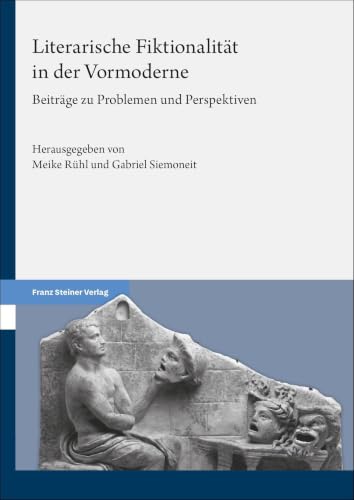
Literarische Fiktionalität in der Vormoderne: Beiträge zu Pr
Franz Steiner Verlag
ab 44,00 €
inkl. MwSt.
1 Anbieter im Vergleich

Griechischhumanismus des 16. Jahrhunderts: Lorenz Rhodoman i
Franz Steiner Verlag
ab 78,00 €
inkl. MwSt.
1 Anbieter im Vergleich

Politik der Unpolitischen: Zur katholischen Liturgischen Bew
Franz Steiner Verlag
ab 64,00 €
inkl. MwSt.
1 Anbieter im Vergleich

Emotionen im Krieg – Krieg der Emotionen (Hamburger Studien
Franz Steiner Verlag
ab 48,00 €
inkl. MwSt.
1 Anbieter im Vergleich

Lehrpersonen an berufsbildenden Schulen im Spiegel empirisch
Franz Steiner Verlag
ab 62,00 €
inkl. MwSt.
1 Anbieter im Vergleich
Weitere Produkte in „Bücher“
Alle in Kategorie →

Einführung in das römische Privatrecht: Ausgewählte Themenge
Utb Gmbh
ab 25,00 €
inkl. MwSt.
1 Anbieter im Vergleich

Jutta Limbach: Ein Leben für die Gerechtigkeit. Biografie
Beck C. H.
ab 29,90 €
inkl. MwSt.
1 Anbieter im Vergleich

Rechtsgeschichte: Von der Römischen Antike bis zur Neuzeit (
Müller C.f.
ab 26,00 €
inkl. MwSt.
1 Anbieter im Vergleich

Die internationalprivatrechtliche Qualifikation: Bestimmung
Mohr Siebeck
ab 89,00 €
inkl. MwSt.
1 Anbieter im Vergleich

Babusiaux, Ulrike: Wege zur Rechtsgeschichte: Römisches Erbr
Utb Gmbh
ab 30,00 €
inkl. MwSt.
1 Anbieter im Vergleich
Häufige Fragen zur EAN 9783515136686
Beantwortet aus dem Preisverlauf der letzten 90 Tage, den aktuellen Händlerangeboten, den vorliegenden Bewertungen und der Nachfrage.
Ist "Utilitas" in Roman Jurists’ Legal Interpretation (Potsdamer Altert… im Vergleich gerade günstig?
Der Bestpreis ist seit 23.07.2026 stabil geblieben (52,00 € → 52,00 €). In der Kategorie Bücher sind die Preise in 90 Tagen stabil geblieben. Der Bestpreis bewegt sich im Trend der Kategorie Bücher.
Preisdaten zuletzt aktualisiert: 21.10.2026 10:19 Uhr