Basierend auf den letzten 14 Tagen des Preisverlaufs.
Preis-Check günstiger als der Trend
Dieses ProduktBestpreis seit 27.07.2026 um 9,2 % gefallen (14,92 € → 13,55 €)
Kategorie BücherPreise in 90 Tagen stabil geblieben (Median von 1.018 Produkten)
Der Bestpreis hat sich günstiger entwickelt als der Trend der Kategorie Bücher (9,2 Prozentpunkte besser). Mit 13,55 € liegt der Bestpreis etwa auf Höhe des mittleren Preises (13,67 €) von 305 Bloomsbury-Produkten in Bücher.
Bestpreis aus dem Preisverlauf; Kategorie- und Markentrend: Median der Preisänderung gleicher Produkte im selben Shop über 90 Tage, wöchentlich berechnet. Methodik
Browser-Benachrichtigung bei PreissenkungWir melden uns, sobald es günstiger wird als heute (13,55 €) — höchstens einmal am Tag. Ohne E-Mail, ohne Konto, jederzeit abbestellbar. Amazon-Angebote sind ausgenommen. Datenschutz
Aktuell ab 13,55 € —
bei welchem Preis sollen wir dich benachrichtigen?
Einmalige Benachrichtigung per E-Mail nach Bestätigung (Double-Opt-in).
Keine Weitergabe. Datenschutz
Hinweis: Amazon-Preise sind in der Preisverfolgung bzw. im Preisverlaufsgraphen nicht enthalten. Wir versenden keine Benachrichtigungen zu Produkten über Amazon.
Kundenbewertungen
Noch keine Bewertungen vorhanden.
Deine Bewertung *
0/2000
Bewertungen werden nach KI-Prüfung veröffentlicht.
Produktfakten auf einen Blick zur EAN 9781472960405
Hersteller
Bloomsbury
EAN
9781472960405
Hersteller-Artikelnr.
1313337
Kategorie
Bücher
Günstigster Preis
13,55 € (averdo.com)
Anbieter im Vergleich
4 Shops
Preise aktualisiert
24.10.2026 18:21 Uhr
Produktbeschreibung
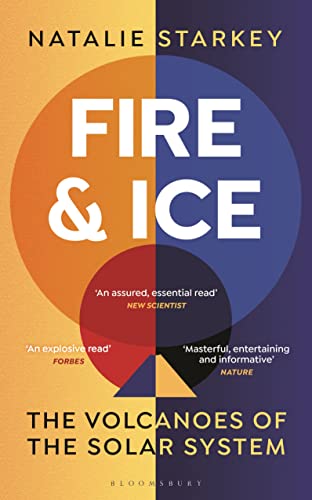
A tour of the Solar System's tallest, hottest, coldest and weirdest volcanoes - and a look inside what makes them erupt. The volcano - among the most familiar and perhaps the most terrifying of all geological phenomena. However, Earth isn't the only planet to harbour volcanoes. In fact, the Solar System, and probably the entire Universe, is littered with them. Our own Moon, which is now a dormant piece of rock, had lava flowing across its surface billions of years ago, while Mars can be credited with the largest volcano in the Solar System, Olympus Mons, which stands 25km high. While Mars's volcanoes are long dead, volcanic activity continues in almost every other corner of the Solar System, in the most unexpected of locations. We tend to think of Earth volcanoes as erupting hot, molten lava and emitting huge, billowing clouds of incandescent ash. However, it isn't necessarily the same across the rest of the Solar System. For a start, some volcanoes aren't even particularly hot. Those on Pluto, for example, erupt an icy slush of substances such as water, methane, nitrogen or ammonia, that freeze to form ice mountains as hard as rock. While others, like the volcanoes on one of Jupiter's moons, Io, erupt the hottest lavas in the Solar System onto a surface covered in a frosty coating of sulphur. Whether they are formed of fire or ice, volcanoes are of huge importance for scientists trying to picture the inner workings of a planet or moon. Volcanoes dredge up materials from the otherwise inaccessible depths and helpfully deliver them to the surface. The way in which they erupt, and the products they generate, can even help scientists ponder bigger questions on the possibility of life elsewhere in the Solar System. Fire and Ice is an exploration of the Solar System's volcanoes, from the highest peaks of Mars to the intensely inhospitable surface of Venus and the red-hot summits of Io, to the coldest, seemingly dormant icy carapaces of Enceladus and Europa, an unusual look at how these cosmic features are made, and whether such active planetary systems might host life.
* Alle Preise inkl. MwSt., ggf. zzgl. Versandkosten. Preise und Verfügbarkeit können sich seit der letzten Aktualisierung geändert haben.
Beim Klick auf „Zum Angebot" oder „Zum Shop" verlässt du EAN-Shopping.de und wirst zum jeweiligen Händler weitergeleitet.
EAN-Shopping.de erhält ggf. eine Provision — für dich entstehen keine Mehrkosten.
Letzte Aktualisierung: 24.10.2026 18:21 Uhr.
Beantwortet aus dem Preisverlauf der letzten 90 Tage, den aktuellen
Händlerangeboten, den vorliegenden Bewertungen und der Nachfrage.
Ist Fire and Ice: The Volcanoes of the Solar System gerade günstig?

Aktuell liegt der günstigste Preis bei 13,55 €. Das sind 3 % über dem 90-Tage-Tief von 13,15 € — für diesen Zeitraum ein günstiger Wert.
Wo ist Fire and Ice: The Volcanoes of the Solar System am günstigsten?
Den niedrigsten Gesamtpreis bietet averdo.com mit 15,20 € versandkostenfrei. Der niedrigste reine Artikelpreis liegt zwar bei 13,55 €, mit Versand wird dieses Angebot aber teurer.
Ist Fire and Ice: The Volcanoes of the Solar System lieferbar?
Alle 4 Anbieter melden den Artikel derzeit als verfügbar.
Wie stark schwankt der Preis für Fire and Ice: The Volcanoes of the Solar System?
In den letzten 90 Tagen bewegte sich der günstigste Preis zwischen 13,15 € und 14,92 € — eine Spanne von 13 %. Gemessen an 85 Tagen mit Preisdaten.
Lohnt sich der Preisvergleich bei Fire and Ice: The Volcanoes of the Solar System?
Zwischen dem günstigsten und dem teuersten der 4 Anbieter liegen 3,45 € — das sind 25 % bei identischem Artikel.
Ist Fire and Ice: The Volcanoes of the Solar System im Vergleich gerade günstig?
Der Bestpreis ist seit 27.07.2026 um 9,2 % gefallen (14,92 € → 13,55 €). In der Kategorie Bücher sind die Preise in 90 Tagen stabil geblieben. Der Bestpreis hat sich günstiger entwickelt als der Trend der Kategorie Bücher (9,2 Prozentpunkte besser). Mit 13,55 € liegt der Bestpreis etwa auf Höhe des mittleren Preises (13,67 €) von 305 Bloomsbury-Produkten in Bücher.